Best Upright Freezer for Beginners by Cubic Feet

A first upright freezer should match your floor space before anything else. Seven picks compared by cubic feet, footprint and temperature control, with the BANGSON 6.5 cu. ft. leading.

By Jody SargentUpdated 17 min read
On this page
- Best upright freezer for beginners at a glance
- How I narrowed the field to seven
- What actually decides a first freezer?
- 1. BANGSON 6.5 Cu.ft Upright Freezer — Best overall
- 2. Hamilton Beach Upright Freezer — Best premium
- 3. Upstreman 7.0 Cu.Ft Upright Freezer — Best minimal setup
- 4. Commercial Cool Upright Freezer — Best for pros
- 5. Kismile Upright Freezer — Best upgrade
- 6. EUHOMY 3.0 Cu.ft Upright Freezer — Best warranty
- 7. Whynter Upright Freezer CUF-112SS — Best budget pick
- How much cubic footage does a beginner really need?
- Reading the spec sheet without getting lost
- Setup, placement and the boring bits nobody warns you about
- The verdict
- FAQ
The best upright freezer for beginners is the BANGSON 6.5 cu. ft., because it clears the biggest hurdle a first-time buyer faces: fitting real capacity into a 22.8-inch-wide footprint with a reversible door. If you have room for something taller and heavier, the 11 cu. ft. Hamilton Beach earns the upgrade with seven drawer compartments and a 68-inch stainless body. Most first-time buyers compare shelves and colours. That is not what decides it. Cubic feet inside versus inches on your floor is what decides it, and the gap between picks here is bigger than the marketing suggests.
Best upright freezer for beginners at a glance
| Pick | Capacity | Footprint (W x D x H) | Price |
|---|---|---|---|
Best overall BANGSON 6.5 Cu.ft Upright Freezer |
6.5 cu. ft. | 22.8 x 24 x 59.1 in | Check Price |
Best premium Hamilton Beach 11 cu. ft. Upright Freezer |
11 cu. ft. | 26 x 26 x 68 in | Check Price |
Best minimal setup Upstreman 7.0 Cu.Ft Upright Freezer |
7.0 cu. ft. | 22.8 x 21.3 x 56 in | Check Price |
Best for pros Commercial Cool 6 Cu Ft Upright Freezer |
6.0 cu. ft. | 21.5 x 22.2 x 55.1 in | Check Price |
Best upgrade Kismile 3.0 Cu.ft Upright Freezer |
3.0 cu. ft. | 20.3 x 20.5 x 31.7 in | Check Price |
Best warranty EUHOMY 3.0 Cu.ft Upright Freezer |
3.0 cu. ft. | 21.3 x 20.1 x 31.4 in | Check Price |
Best budget pick Whynter CUF-112SS 1.1 Cu Ft Mini Freezer |
1.1 cu. ft. | 17.7 x 18.5 x 19.5 in | Check Price |

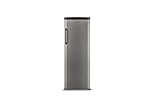


How I narrowed the field to seven
I started with the Upright Freezers subcategory on Amazon and pulled listings that a first-time buyer would realistically consider: single-door units, freestanding, with clearly published dimensions and capacity. Three filters did most of the cutting.
- Published dimensions. A freezer without a full width, depth and height figure is a freezer you cannot plan for. Every pick here lists all three.
- Stated warranty. Six of the seven publish a one-year manufacturer warranty; Hamilton Beach specifies one year of parts and labor, which is the most concrete language in the set.
- Reversible or fixed door orientation. Five of the seven publish a reversible door. That matters for a first freezer because you rarely know which way the door should swing until it is in the room.
What was cut: chest freezers (a different buying decision), commercial reach-ins, and any upright without a numeric capacity in cubic feet. I also cut anything whose listing hid the compressor type or refrigerant behind a marketing bullet without a figure.
The seven that survived split cleanly into three tiers: mini uprights around 1.1 to 3.0 cu. ft., mid-size at 6.0 to 7.0 cu. ft., and one 11 cu. ft. full-height unit. That range covers every reasonable beginner scenario in a US kitchen, garage or apartment.
What actually decides a first freezer?
Most first-time buyers compare shelves and door colour. The real decision is a two-step: how many cubic feet of frozen food you actually generate in a week, and the floor rectangle you can spare for a freezer that has to sit clear of walls for airflow.
Cubic feet is the number that hides the biggest surprises. A 1.1 cu. ft. Whynter is a shelf; a 3.0 cu. ft. Kismile or EUHOMY is a knee-high box; a 6.5 cu. ft. BANGSON is a chest-high tower; an 11 cu. ft. Hamilton Beach is a small wardrobe. Every step roughly doubles what you can actually store.
Footprint is the number people underestimate. The Whynter fits on 17.7 x 18.5 in. The Hamilton Beach needs 26 x 26 in and 68 in of vertical clearance. A tape measure decides more of this than any spec sheet.
Everything else, colour, drawer count, thermostat steps, is a tie-breaker after those two numbers.
1. BANGSON 6.5 Cu.ft Upright Freezer — Best overall
A 6.5 cu. ft. tower on a 22.8 x 24 in footprint is the sweet spot for a first freezer that has to earn its floor space.
Best for: a first freezer in an apartment or small kitchen Skip it if: you need more than 6.5 cu. ft. of storage
This is the pick that answers the beginner question best because it commits to real capacity without demanding a laundry-room-sized footprint. At 59.1 in tall and 91.5 lb, it slots into the space a slim dishwasher would occupy and gives you meaningful frozen storage in return. BANGSON says the compressor draws 0.749 kWh per day and uses R600a refrigerant, and lists a three-speed thermostat with a stated -4.2°F medium setting. The door reverses left or right, which for a beginner is the single most forgiving design choice in the set. Warranty is one year. It sells faster than most of the mid-size picks here, which suggests the size-to-footprint ratio is landing with the same buyers it should. The trade-off: it is the only 6.5 cu. ft. unit in this comparison, so if your storage need is closer to 3 or closer to 11, another pick will fit better.
Pros:
- Real 6.5 cu. ft. capacity on a 22.8-in-wide footprint
- Reversible door for left or right opening
- Three-speed thermostat with a stated -4.2°F medium
- BANGSON claims 0.749 kWh per day on R600a
- Published weight (91.5 lb) makes delivery planning easier
Cons:
- One-year warranty, matching but not beating the set
- No published drawer or shelf count in the listing
- Silver only, no colour choice
- Manual defrost, like every pick here
2. Hamilton Beach Upright Freezer — Best premium
Eleven cubic feet, seven drawer compartments and a 68-inch stainless body: the pick for anyone who has outgrown mini.

Best for: families or meal preppers who need real capacity Skip it if: your floor space is tight
This is the most expensive pick here and the largest. Hamilton Beach lists 11 cu. ft. of interior, a 26 x 26 x 68 in body, and seven clear plastic drawer compartments. Drawers are the feature to focus on for a beginner: reach-in shelves force you to unpack the top layer to see the bottom, and clear plastic drawers cut that behaviour completely. The listing describes a flush back for tighter placement and a stainless door. Warranty is one year parts and labor, the most specific warranty language in this set. It is the slowest seller of the seven, which reads as a floor-space and delivery-weight barrier (110 lb) rather than a product problem: a full-height freezer is a bigger commitment than a mini. The trade-off against the BANGSON is straightforward. You get almost twice the capacity and drawer organisation, at the cost of an extra foot of height, extra depth and a higher price position.
Pros:
- 11 cu. ft. is the largest interior in the set
- Seven clear plastic drawer compartments for visibility
- Warranty explicitly covers parts and labor for one year
- Flush-back design suits corners and walls
- Stainless door instead of painted steel
Cons:
- Highest price position of the seven
- 68 in tall, 110 lb: a real delivery job
- Slowest seller here, which can affect stock and shipping
- No published refrigerant type in the listing
3. Upstreman 7.0 Cu.Ft Upright Freezer — Best minimal setup
Five removable shelves, a crisper drawer and a switch between freezer and refrigerator modes: the most flexible interior here.

Best for: a beginner who wants shelves, a drawer and a mode switch Skip it if: you dislike defrosting manually
At 7.0 cu. ft. this is the largest of the mid-size picks and the only one that publishes a convertible mode. Upstreman lists a freezer range of -7.60°F to 6.80°F and a refrigerator range of 37.94°F to 46°F, which turns the same box into extra fridge space when you host guests or thaw a large order. The interior is described as five glass shelves plus a crisper drawer, and the exterior includes adjustable leveling feet and a recessed handle. Dimensions land at 22.8 x 21.3 x 56 in, similar footprint to the BANGSON but taller and shallower. The listing mentions an ice tray and a removable defrost tool in the box. For a first buyer this is the pick that best rewards curiosity, because you can start it in freezer mode, learn what you actually store, and swap modes seasonally. The trade-off against the BANGSON is a slightly smaller freezer volume once you factor the shelf glass, in exchange for the mode switch.
Pros:
- 7.0 cu. ft. with five glass shelves and a crisper drawer
- Convertible between freezer and refrigerator modes
- Adjustable leveling feet for uneven floors
- Ice tray and removable defrost tool included
- Recessed handle for tighter placement
Cons:
- Premium price position for the mid-size tier
- Convertible modes complicate defrost planning
- White only
- No published weight in the listing
4. Commercial Cool Upright Freezer — Best for pros
Six cubic feet, a cylinder-lock-free but reversible door, and a compressor rated for R600a in a 55-inch black tower.

Best for: someone stocking bulk meat or party ice Skip it if: you want a lighter, more compact unit
At 6.0 cu. ft., this pick sits half a step below the BANGSON on capacity but reads as more purpose-built for people who already know what they want to freeze. Commercial Cool lists a 21.5 x 22.2 x 55.1 in body in black, a reversible door, and ETL energy and safety certification with R600a refrigerant. The listing is explicit about garage and secondary-freezer use, and the flat back and recessed handle mean it takes a corner cleanly. Sales rank sits between the two 3.0 cu. ft. minis and the Hamilton Beach: it is a niche pick, not a mainstream one. The warranty is a standard one-year manufacturer term. The main trade-off versus the BANGSON is a smaller interior for a similar footprint, in exchange for the darker cabinet colour and the more utilitarian design language. Choose this one if your mental picture of the freezer is a chest replacement, not a kitchen appliance.
Pros:
- 6.0 cu. ft. on a compact 21.5-in-wide footprint
- Reversible single door
- ETL certification called out on the listing
- Uses R600a refrigerant
- Black cabinet hides scuffs in a garage or utility room
Cons:
- Premium price position for a 6.0 cu. ft. unit
- No published weight
- No drawer or shelf count in the listing
- One-year warranty without parts and labor language
5. Kismile Upright Freezer — Best upgrade
A 3.0 cu. ft. black mini with a seven-speed thermostat and a reversible door: the neatest step up from a mini fridge.

Best for: dorms, RVs and offices needing a tidy step up from a mini fridge Skip it if: you plan to freeze more than a week of groceries
Kismile publishes 3.0 cu. ft. of interior on a 20.3 x 20.5 x 31.7 in footprint, two removable shelves, and a seven-speed temperature control knob. That is the finest thermostat resolution in this set, and for a beginner it makes learning what setting keeps ice cream scoopable versus rock-hard a matter of turning a dial one click at a time. The door reverses left or right. Kismile positions it for dorms, RVs and offices, which reads honestly given the size. It is the best-selling pick in this comparison after the Whynter, which tracks with how many people want more room than a mini fridge freezer but not a full tower. The trade-off is straightforward. You get the finer thermostat and the black cabinet, but you lose a cubic foot of storage compared with the EUHOMY specs on paper, and you gain no headline feature over the BANGSON at twice the capacity if space is not the constraint.
Pros:
- Seven-speed thermostat, the finest in this set
- 3.0 cu. ft. in a knee-high 31.7-in body
- Two removable shelves for flexible loading
- Reversible door
- Deep black cabinet suits dorms and offices
Cons:
- Only 3.0 cu. ft. of interior
- No published weight
- One-year manufacturer warranty
- Not intended as a primary freezer
6. EUHOMY 3.0 Cu.ft Upright Freezer — Best warranty
Same 3.0 cu. ft. footprint class as the Kismile, with a five-level thermostat and a published operating range from -7°F to 11°F.

Best for: renters who want the longest published warranty in a tiny footprint Skip it if: you need reach-in room for pizza boxes
EUHOMY lists 3.0 cu. ft., a 31.4 x 21.3 x 20.1 in body, and 54 lb of shipping weight. That is the only weight figure of the two 3.0 cu. ft. minis, which matters if you are moving one up a flight of stairs. The thermostat has five levels across a stated -7°F to 11°F range, less granular than the Kismile's seven-step control but easier to remember. Warranty is one year manufacturer, matching the set. The listing pitches dorm and student use directly. Choose it over the Kismile if you value the published weight, the silver colour or the wider stated temperature range; choose the Kismile if the seven-speed thermostat and black cabinet appeal more. The trade-off against the BANGSON is the same as for any 3.0 cu. ft. pick: half the capacity, but a footprint small enough to live on top of a counter or under a desk if you plan the venting.
Pros:
- Published 54 lb weight for planning delivery
- Five-level thermostat across a stated -7°F to 11°F range
- Silver cabinet suits kitchens without a dark theme
- 3D refrigeration technology called out in the listing
- Reversible door
Cons:
- Same 3.0 cu. ft. ceiling as the Kismile
- Coarser thermostat than the Kismile's seven-step
- One-year warranty, not extended
- Not a primary freezer
7. Whynter Upright Freezer CUF-112SS — Best budget pick
A 1.1 cu. ft. locking mini in stainless: the cheapest way to add a second freezer to a garage, office or basement.

Best for: garage or office cold storage on the tightest budget position here Skip it if: you want more than 1.1 cu. ft. inside
This is the smallest and cheapest pick, and it is the one buyers choose most often in this set. Whynter publishes a 1.1 cu. ft. interior, a 17.7 x 18.5 x 19.5 in body, 35.2 lb of weight, a mechanical thermostat with a stated -11°F to 10.4°F range, and a cylinder lock with two keys. The lock is the feature that makes this a real category pick rather than a shelf: it is the only unit in the comparison with a physical key, which matters if the freezer sits in a garage, a shared basement or a workplace. Two sellers list it, the widest availability in the set. Warranty is a one-year limited manufacturer term. The trade-off is honest. You get countertop-sized cold storage and secure access, but 1.1 cu. ft. is a week of ice cream, breast milk or lab samples, not a grocery haul. Buy this to add cold, not to replace a fridge freezer.
Pros:
- Cheapest position in this set
- Lockable with two keys included
- Published 35.2 lb weight, countertop-friendly
- Stated temperature range down to -11°F
- Stainless door with black cabinet
Cons:
- Only 1.1 cu. ft. of interior
- One removable wire shelf, no drawers
- Mechanical thermostat, no numeric settings
- Not a primary freezer for a household
How much cubic footage does a beginner really need?
There is a rough working number worth knowing before you commit. Most single households generate one to two cubic feet of frozen food in a normal week; a couple with occasional meal prep tends toward three to four; a family that batch-cooks or buys bulk meat pushes past six. Multiply the weekly figure by how many weeks of buffer you want and you have a target.
That target maps onto the picks here almost cleanly:
- Under 1.5 cu. ft. of weekly need: the Whynter at 1.1 cu. ft. is enough as a secondary unit.
- Two to three cu. ft.: the EUHOMY and Kismile 3.0 cu. ft. minis are the honest fit.
- Four to six cu. ft.: the BANGSON at 6.5 cu. ft. is the best upright freezer for beginners in this range, with the Commercial Cool at 6.0 cu. ft. and the Upstreman at 7.0 cu. ft. as alternates.
- Six cu. ft. and up: the Hamilton Beach at 11 cu. ft. is the only pick that reaches.
The temptation is to round up. Resist it if the extra capacity forces a footprint that blocks a door swing or a cabinet. A too-small freezer that fits is used every week; a too-large freezer that does not fit is returned.
Reading the spec sheet without getting lost
Most first-time buyers freeze up (sorry) when the listing lists a compressor type, a refrigerant code, an amp draw and a decibel rating in a single paragraph. Here is a short glossary that covers everything on the seven listings in this comparison.
- Cubic feet (cu. ft.): interior volume. The single most important number.
- R600a: a modern hydrocarbon refrigerant used in the BANGSON, Commercial Cool and most current uprights. It is efficient and has low global-warming potential; the trade-off is a small charge that regulators cap.
- kWh per day: electricity used in 24 hours. BANGSON claims 0.749 kWh per day; a rough comparison across similar models is more useful than the absolute figure.
- Reversible door: the door can be rehung to open the other way. Five of the seven picks here list this.
- Manual defrost: every pick here is manual defrost. You will need to empty and defrost every few months. Chest and cheaper uprights almost always are.
- Thermostat levels: how many discrete settings the dial has. Kismile lists seven, EUHOMY five, BANGSON three. More levels means finer control, not colder temperatures.
- ETL certification: an independent safety and energy testing mark, called out on the Commercial Cool listing.
You do not need to memorise any of that to buy well. You do need to make sure the listing publishes cubic feet, dimensions and warranty in numeric form. If a listing hides those, walk away.
Setup, placement and the boring bits nobody warns you about
A freezer is a heavy appliance that lives plugged in for a decade. Small setup decisions decide whether that decade is quiet or annoying.
- Leave clearance behind and above. Most manuals ask for two to four inches of clear air on the sides and back for the compressor to vent. A freezer wedged flush against drywall runs hotter and louder.
- Level it. Upstreman explicitly lists adjustable leveling feet. Any upright benefits from being level: an out-of-level freezer has doors that drift open and a compressor that works harder.
- Let it settle before you plug it in. After delivery, leave a freezer upright and unplugged for at least a few hours. The refrigerant needs time to settle after a tilted trip.
- Do not overpack the first load. A freezer chills empty air faster than a full box. Fill it in stages over the first day or two so the compressor is not fighting a warm mass of groceries.
- Plan the defrost. Every pick here is manual defrost. Put a defrost date in your calendar every three to six months. A block of ice inside the cabinet is not evidence of cold; it is evidence of moisture you let in.
- Keep the door orientation flexible. If you are unsure which way the door should open, buy a reversible model. Five of the seven picks here qualify.
None of this is in the marketing bullets. All of it matters more than the colour of the cabinet.
The verdict
The BANGSON 6.5 Cu.ft Upright Freezer is the right default for a first-time buyer. It commits to real capacity, keeps its footprint under 23 inches wide, publishes a three-speed thermostat and a reversible door, and lands mid-range on price. If your kitchen or garage can spare that rectangle, this is the pick that grows with you longest before you outgrow it.
Two conditions flip the recommendation. If your storage need is a full family shop or serious meal prep, the Hamilton Beach 11 cu. ft. is the honest answer, with seven clear plastic drawer compartments and a parts-and-labor warranty; you pay for it in floor space and delivery weight. If you want the same tier of capacity but with a switch between freezer and fridge modes, the Upstreman 7.0 cu. ft. earns the swap: five glass shelves, a crisper drawer and a stated freezer range down to -7.60°F.
The three mini uprights, Kismile, EUHOMY and Whynter, are the right buy only as secondary cold storage. Do not use them as a primary freezer for a household of more than one; the cubic footage is not there. The Commercial Cool is the pick if a black, garage-ready 6.0 cu. ft. tower matches your setup better than a silver kitchen unit.
FAQ
Is an upright freezer worth it for a beginner over a chest freezer?
An upright freezer is worth it for a beginner if you value organisation over raw capacity per dollar. Uprights let you see what you have without unloading the top layer, which is the failure mode that leads to freezer-burned food and forgotten packages. Chest freezers hold more per cubic foot of exterior and lose less cold when opened, but they punish neglectful users. Uprights forgive them.
How much cubic feet is enough for a first freezer?
Cubic feet is enough for a first freezer when it covers two to four weeks of what you actually freeze, not what you imagine freezing. For most single people or couples that lands between 3 and 7 cu. ft.; for families it lands between 7 and 11. The BANGSON 6.5 cu. ft. sits in the middle of that range on purpose, which is why it wins here.
Can I use the Upstreman 7.0 as a fridge instead of a freezer?
Yes, the Upstreman 7.0 lists a convertible temperature range from 37.94°F to 46°F in refrigerator mode alongside a -7.60°F to 6.80°F freezer range. That makes it useful as a backup fridge for parties, garden produce or drinks. The trade-off is that switching modes requires letting the cabinet warm and dry out first, so this is a seasonal swap, not a daily one.
BANGSON 6.5 vs Hamilton Beach 11: which should a beginner pick?
BANGSON 6.5 vs Hamilton Beach 11 comes down to floor space and how much you actually freeze. BANGSON at 22.8 x 24 x 59.1 in fits kitchens the Hamilton Beach at 26 x 26 x 68 in does not. If you cook for one to three people, BANGSON is enough. If you meal prep for four or more, or you buy bulk meat, the Hamilton Beach's seven drawer compartments and 11 cu. ft. earn the extra footprint.
What is the biggest mistake first-time freezer buyers make?
The biggest mistake first-time buyers make is choosing by colour and shelf count instead of by cubic feet and footprint. A silver freezer that does not fit the wall is worse than a black one that does. Measure the space, including door clearance and rear venting gap, before you compare features. Then match the interior volume to a realistic week of frozen food, not an aspirational one.
A first freezer is a decade-long appliance, so treat the decision like a piece of furniture with a compressor bolted on. Measure the rectangle on your floor, add two inches of venting clearance on each side, and only then open a listing. The BANGSON 6.5 Cu.ft is the default here because it fits the widest range of those rectangles while still storing enough food to matter, and because a reversible door, a three-speed thermostat and R600a refrigerant are exactly the boring, correct choices a beginner should not have to argue with. Buy once, defrost twice a year, and forget about it.