Best End Grain Cutting Boards for Pro Kitchens

A ranked shortlist of six end grain cutting boards judged on thickness, footprint and weight, with the buyer profile each one actually fits.

By Jody SargentUpdated 16 min read
On this page
- Best end grain cutting board for professional chefs at a glance
- How I cut 40 listings down to six
- What actually decides an end grain board?
- 1. Ironwood Gourmet Charleston — Best overall
- 2. BABILONIA Large Walnut — Best minimal setup
- 3. SHUMARU XL End Grain — Best for pros
- 4. Bevel & Bond Maple — Most versatile
- 5. BABILONIA American Walnut — Best upgrade
- 6. Sonder Los Angeles Alfred — Best premium
- Does the wood species really matter?
- How big a board does a working cook need?
- What the listings do not tell you about care
- The verdict
- FAQ
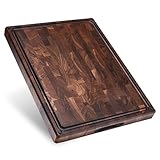
The best end grain cutting board for professional chefs in this set is the Ironwood Gourmet Charleston, a 14 x 14 in acacia block at 1.25 in thick and 4 lb that reads as a compact chef's station. For a bigger, heavier slab, the BABILONIA Large Walnut runs 20 x 16 in at 12.3 lb and turns the counter into a full prep zone. Get the board wrong and you dull a working knife inside a season, warp a slab you paid a week's grocery bill for, or clear the counter every time a chicken needs breaking down.
Best end grain cutting board for professional chefs at a glance
| Pick | Size | Thickness / Weight | Price |
|---|---|---|---|
Best overall Ironwood Gourmet Charleston |
14 x 14 in | 1.25 in / 4 lb | Check Price |
Best minimal setup BABILONIA Large Walnut |
20 x 16 in | 1.4 in / 12.3 lb | Check Price |
Best for pros SHUMARU XL End Grain |
20 x 13 in | 1.6 in / 11 lb claim | Check Price |
Most versatile Bevel & Bond Maple |
17 x 13 in | 1.75 in / 10 lb | Check Price |
Best upgrade BABILONIA American Walnut |
19.7 x 12.2 in | 1.7 in / 8.81 lb | Check Price |
Best premium Sonder LA Alfred Walnut |
17 x 13 in | 1.5 in / 7.5 lb | Check Price |


How I cut 40 listings down to six
Three cuts got me here. First, I dropped any board that was not clearly end grain: edge-grain and face-grain blocks are cheaper, harder on knives, and easy to spot in a listing photo. Second, I dropped any board under 1.25 in thick, because a thin end grain slab is the one most likely to warp on a wet counter. Third, I dropped anything without a stated size and weight in the listing: a board you cannot measure in advance is a gamble on freight and counter space.
What survived is six boards from six brands, covering three woods and a real spread of footprints. The smallest is 14 x 14 in and 4 lb. The largest is 20 x 16 in and 12.3 lb. The thinnest is 1.25 in. The thickest is 1.75 in.
- Cut for grain: edge and face-grain listings dropped.
- Cut for thickness: anything under 1.25 in dropped.
- Cut for missing data: no stated size or weight, dropped.
That last one matters more than it sounds. An end grain board is a heavy piece of hardwood that lives on your counter. You need to know it fits, and you need to know you can lift it into a sink.
What actually decides an end grain board?
Most guides in this category compare wood species first. Species matters, but it is not what decides the buy for a working cook.
Thickness and footprint decide it. A 1.75 in slab sits flat and stays flat; a 1.25 in slab is quicker to move but more prone to cup if you wash one side and leave the other dry. Footprint decides whether you can break down a chicken without hanging the wings off the edge. Weight decides how often you will actually pick it up to clean it, which decides how long it lasts.
Here is the trick with end grain: the fibres run vertically, so the knife edge slips between them instead of shearing across. That is what gives you the "self-healing" surface the listings talk about, and it is why a good end grain board is gentle on knives. But the effect only shows up if the board is thick enough to stay flat. A warped board is a dull board, because the edge stops meeting the surface evenly.
So the decision goes: pick your footprint first, your thickness second, your wood third. The reverse order is how people end up with a gorgeous slab that does not fit next to the range.
1. Ironwood Gourmet Charleston — Best overall
The most flexible end grain board here for a home kitchen that still runs at chef pace.
Best for: a compact home prep station that still handles daily chef work Skip it if: you need a full butcher-block footprint for breaking down large cuts
Within this set, the Charleston is the outlier for one reason: it is the smallest and lightest board on the list, at 14 x 14 in, 1.25 in thick, and 4 lb. That is not a criticism. Every other pick sits between 7.5 and 12.3 lb, which is real weight to move to a sink. The Charleston lives on the counter, gets picked up one-handed, and goes under the tap without a second thought. Ironwood says it is designed by a restaurateur and woodworker in North Carolina and built in Thailand from sustainably harvested acacia. The square footprint is unusually useful: it gives you the same working length in either orientation, so you can turn it 90 degrees when you switch from slicing to dicing without shuffling ingredients. It sells faster than most of this set. The trade-off is thickness. At 1.25 in it is the thinnest board here, which means it needs oiling and even drying more than the 1.7 or 1.75 in slabs.
Pros:
- Lightest board in the set at 4 lb
- Square 14 in footprint works in either orientation
- End grain acacia, hand-friendly for daily prep
- The cheapest of the six
- One of the faster sellers in this set
Cons:
- Thinnest board here at 1.25 in
- Smallest working surface of the six
- No stated warranty in the listing
- No non-slip feet mentioned
2. BABILONIA Large Walnut — Best minimal setup
The biggest flat workspace in this set, at a price position that undercuts most of the field.

Best for: a cook who wants the largest flat workspace in this set Skip it if: you plan to move the board on and off the counter often
Twenty by sixteen inches is the largest footprint on the list, and at 12.3 lb it is also the heaviest. That combination tells you exactly what this board is: a permanent counter fixture that turns a section of your kitchen into a butcher block. If your workflow is mise en place plus one big cut, this is the shape you want. You can lay out three prep bowls, a sheet of pastry and a chef's knife on it and still have room to work. BABILONIA describes it as heavy-duty and professional grade, built from 100% walnut end grain. Thickness is 1.4 in, which is more than the Charleston and less than the 1.7 to 1.75 in premium slabs. The catch is the same as the strength: 12.3 lb is a lot to lift into a sink to hand-wash, so you will do most of your cleaning with a scraper and a damp cloth on the counter. That is fine for a board that lives out anyway.
Pros:
- Largest surface in this set at 20 x 16 in
- 12.3 lb sits rock steady for heavy chopping
- Walnut end grain, gentle on blades
- Second-cheapest of the six
Cons:
- 12.3 lb is a lift for sink cleaning
- 1.4 in thickness sits below the premium picks
- No non-slip feet mentioned in the listing
- No stated warranty
3. SHUMARU XL End Grain — Best for pros
A groove-free 260 sq in slab built to work as one uninterrupted prep surface.

Best for: high-volume prep where a groove-free surface earns its keep Skip it if: you carve a lot of roasts and need a juice channel
The SHUMARU is the second-largest board in this set at 20 x 13 in and the thickest but one at 1.6 in. Where it differs is the surface: SHUMARU says the top is flat and groove-free, giving what the listing calls 260 square inches of uninterrupted workspace. For a cook who scrapes prepped vegetables straight into a pan or a bowl, that flat surface is the point. A juice groove eats real estate and traps liquid you did not want trapped. The board is made from suar wood, which is the outlier in a set otherwise split between acacia, maple and walnut. SHUMARU claims 11 lb and includes non-slip feet. It is the slowest seller of the six here, which is worth noting but does not tell you much on its own: suar is less familiar than walnut, and the brand is newer. The trade-off is the missing juice groove. If you carve roasted meats, you will want a rimmed board or a sheet pan under this one.
Pros:
- 260 sq in flat, groove-free surface
- 1.6 in thick, second-thickest in this set
- Non-slip feet included per listing
- Suar wood, the only one of its kind here
Cons:
- No juice groove for meat carving
- Listing does not state a weight beyond the 11 lb claim
- No stated warranty
- The slowest seller of the six
4. Bevel & Bond Maple — Most versatile
The thickest slab in the set, in the wood most working kitchens default to.

Best for: a cook who wants maple hardness and non-slip feet in one board Skip it if: you want walnut's darker look or a bigger surface
Bevel & Bond publishes a full 1.75 in thickness, which is the thickest slab in this comparison. At 17 x 13 in and 10 lb, the footprint is mid-pack: bigger than the Charleston, smaller than the two 20-inchers. The brand says the board is handcrafted in the USA from North American hard maple, with rubber feet for stability. Maple is denser than walnut and lighter in colour, so knife marks show up less against the pale grain. If you work fast and want a board that shows less wear over a year of daily use, the maple case is a real one. Bevel & Bond calls out that many end grain boards in this category are only 1.5 in thick and prone to cracking, and puts theirs at 1.75 in to counter that; you can take the claim as their own reasoning. The trade-off is that this is a mid-priced board with a smaller footprint than the two big walnut slabs at similar price positions, so you are paying for thickness and origin rather than square inches.
Pros:
- 1.75 in, the thickest slab in this set
- Hard maple hides knife marks better than darker woods
- Non-slip rubber feet included
- Handcrafted in the USA per the listing
Cons:
- Smaller footprint than similarly priced walnut picks
- No stated warranty in the listing
- No juice groove
- 10 lb is a real lift for hand-washing
5. BABILONIA American Walnut — Best upgrade
The second-thickest slab here in a serving-friendly walnut, sized for a chef's station.

Best for: a serve-and-prep board that looks the part on the counter Skip it if: you want the thickest slab in the set
BABILONIA's American Walnut runs 19.7 x 12.2 in at 1.7 in thick and 8.81 lb. That puts it in a specific niche: nearly the length of the SHUMARU, thicker than every board here except the maple, and lighter than the big BABILONIA. The brand positions it as a three-in-one butcher block, cutting board and serving tray, and the dimensions back that up: the length is right for a full charcuterie spread, and the thickness carries the weight of a heavy knife without any flex. The wood is stated as 100% sustainable black walnut grown in America. Where the pick loses out is on published detail. There is no listed non-slip feature and no stated warranty, which is a real gap when you compare it to the Sonder walnut at a similar price position. So this is the board to pick if the look and the size are what you care about, and the pick to skip if you want stated stability aids or a written guarantee.
Pros:
- 1.7 in thick, second-thickest in this set
- 19.7 in length handles carving and serving
- American black walnut per the listing
- Doubles credibly as a serving tray
Cons:
- No non-slip feet mentioned
- No stated warranty
- The most expensive tier for a mid-weight board
- Only one seller lists it
6. Sonder Los Angeles Alfred — Best premium
The only board here with a stated warranty, sorting wells and a juice groove in one build.

Best for: a cook who wants a juice groove, sorting wells and a stated warranty Skip it if: you cook lean and never need to catch runoff
The Alfred is the most expensive pick here and the most feature-loaded. It measures 17 x 13 x 1.5 in at 7.5 lb, which is a middle-of-the-pack footprint and the second-lightest board in the set. What separates it is what the listing publishes. Sonder LA states a 1-year warranty against manufacturing defects, the only stated warranty across the six. The board has removable non-slip feet, three built-in sorting wells for mise en place, and a deep juice groove for meat and fruit. Wood is American black walnut, made in the USA per the listing. Sonder recommends oiling every two to three weeks, which is more frequent than the general "periodically" language on the other picks and is worth planning for. If you have been burned by a warped or split slab in the past, the combination of a written warranty and non-slip feet is exactly the reassurance that costs extra here. The trade-off is thickness: at 1.5 in it sits below the maple and the two thick walnuts.
Pros:
- 1-year manufacturing-defect warranty stated
- Removable non-slip feet plus three sorting wells
- Deep juice groove for meat carving
- End grain American black walnut
Cons:
- The most expensive pick here
- 1.5 in is thinner than three other picks
- Sonder recommends oiling every 2 to 3 weeks
- Only one seller lists it
Does the wood species really matter?
Three woods appear in this set: acacia, maple, walnut, plus one suar. All of them work as end grain surfaces. The differences are real but modest for most cooks.
Hard maple is dense and pale. Knife marks disappear into the grain, and the wood shrugs off stains from onion and beetroot better than the darker options. Bevel & Bond calls maple the top choice for professional chefs; that is their claim, and it is a defensible one for a working kitchen where the board takes daily punishment.
Walnut is softer than maple but still dense enough for end grain use. Its case is aesthetic and tactile: the dark grain hides oil and residue, and a walnut slab reads as furniture on a counter. Three of the six picks here are walnut, which tells you where the market has landed.
Acacia and suar are the outliers. Acacia gives you the Charleston's contrasting light-and-dark grain at the entry position in this set. Suar carries the SHUMARU's flat 260 sq in surface and its lower position in the price stack.
If you cook every day and want the board to look new in a year, choose maple. If you want the board to be a piece of the kitchen you look at as well as cut on, choose walnut. Acacia and suar are the value-first plays.
How big a board does a working cook need?
The honest answer depends on two things: what you cook, and how much counter you have.
- A single chef's knife plus one ingredient. 14 x 14 in is enough. The Charleston fits.
- A full mise en place with three or four prep bowls. You want at least 17 x 13 in. The Bevel & Bond and Sonder land here.
- Breaking down a whole chicken or rolling pasta. You want a full 20 in of length. The BABILONIA Large Walnut, the SHUMARU, and the smaller BABILONIA all clear that bar.
- Serving as well as prepping. 19 to 20 in length with a walnut colour reads well on a table, so the two long walnut boards fit.
The number worth writing down is 17 in. That is the length at which most home cooks stop feeling cramped. Anything below it works for daily use but starts to feel small the moment you cook for four.
Weight matters here too. The heavier the board, the less often you will lift it to clean it, and the more you will lean on scraper-and-wipe hygiene. That is fine for a board that stays put, and it is exactly how most restaurant boards get cleaned during service. Just plan for it, because a 12.3 lb slab wants a permanent home on your counter.
What the listings do not tell you about care
Every one of these listings says "hand wash" and "oil periodically" and stops there. In practice, the care routine that keeps an end grain board flat for years is more specific.
- Wash and dry both faces evenly. Wetting the top and leaving the bottom dry is the fastest way to warp a slab.
- Stand the board on its edge to air-dry, never flat on a wet counter.
- Oil the wood when it looks dry, not on a fixed schedule. Sonder says two to three weeks for the Alfred; other picks say "periodically" without a figure.
- Never soak, never dishwasher. Every listing here is explicit about that.
- Sand out deep knife scars with fine grit once a year if the board sees daily use, then re-oil.
Skip these and even the thickest end grain slab in this set will cup or split inside a year or two. Do them, and you get the "heirloom" outcome the Ironwood listing talks about. That is not a manufacturer promise; that is what wood does when you dry it evenly and keep it fed with oil.
The keyword search for a best end grain cutting board for professional chefs turns up a lot of listings that lean on the word "professional" without publishing the thickness or the weight. That is the shopping trap. In this set every pick publishes both, which is why they made the cut.
The verdict
The Ironwood Gourmet Charleston is the best end grain cutting board for professional chefs in this shortlist for a home kitchen, because it is the lightest and most manoeuvrable of the six and its square 14 x 14 in footprint is unusually flexible for daily prep. The cutoff is 17 in of length: below it, the Charleston wins on ease of handling and price position; above it, the argument flips.
If you cook for a family and want the biggest permanent workspace in the set, the BABILONIA Large Walnut is the better buy: 20 x 16 in, 1.4 in thick, 12.3 lb, sitting at the second-cheapest position here. If you break down proteins and want the flattest, most uninterrupted surface, the SHUMARU XL is the pick for its 260 sq in of groove-free workspace and 1.6 in thickness. If you want the reassurance of a written warranty and the fullest feature set, spend up on the Sonder LA Alfred: it is the only board in this comparison with a stated 1-year warranty, plus sorting wells, a juice groove and removable feet. The best end grain cutting board for professional chefs is not a single answer; it is a footprint decision first.
FAQ
Is an end grain cutting board worth it for a home cook?
Is an end grain cutting board worth the extra spend at home? For a cook who uses a real chef's knife daily, yes. End grain fibres run vertically, so the edge slips between them instead of shearing across, which preserves sharpness longer than an edge-grain or plastic board. If you cook twice a week with a mid-range knife, an edge-grain board is fine. Above that, end grain earns its keep.
What thickness of end grain board is best for professional-style prep?
What thickness of end grain board stays flat under daily pounding? In this set, 1.5 in is the working minimum for heavy prep and 1.75 in is the ceiling. The Bevel & Bond Maple at 1.75 in is the thickest here; the Ironwood Charleston at 1.25 in is the thinnest and best kept for lighter daily work. Below 1.25 in, warping risk climbs sharply on end grain construction.
Ironwood Charleston or BABILONIA Large Walnut for a busy kitchen?
Between the Ironwood Charleston and the BABILONIA Large Walnut, the deciding factor is counter space. The Charleston is 14 x 14 in and 4 lb, so it moves easily between counter and sink. The BABILONIA Large Walnut is 20 x 16 in and 12.3 lb, built to live in one spot. Pick the Charleston for compact kitchens, the BABILONIA for a permanent butcher-block station.
How often should I oil an end grain cutting board?
How often should I oil an end grain slab to keep it flat? Sonder LA states every two to three weeks for the Alfred walnut board. Other picks in this set say "periodically" without a figure. A practical rule: oil whenever the wood looks or feels dry, and always after a deep wash. Use food-grade mineral oil or a dedicated butcher-block conditioner. Never olive oil, which turns rancid.
What is the biggest mistake buyers make with end grain boards?
The biggest mistake buyers make with end grain boards is choosing on wood species before footprint. A gorgeous walnut slab that overhangs your counter or does not fit next to your range is a daily annoyance. Measure your prep zone first, then pick a size that leaves a hand's width on each side, then choose the wood. Every pick here publishes its dimensions so you can plan the fit.
Ready to buy? Measure the working stretch of counter you actually use, subtract three inches for elbow room, and match that to the size column in the table above. If your number lands between 14 and 17 in, start with the Ironwood Charleston: it is the most forgiving board here to live with day to day, the cheapest of the six, and the square footprint gives you more usable workspace than its length suggests. If your number lands at 20 in or more, jump straight to the BABILONIA Large Walnut for the biggest flat surface in this shortlist. The rest of this set fills the gap between the two, sorted by what you value next: warranty, thickness, or wood.